Handoffs without the paperwork
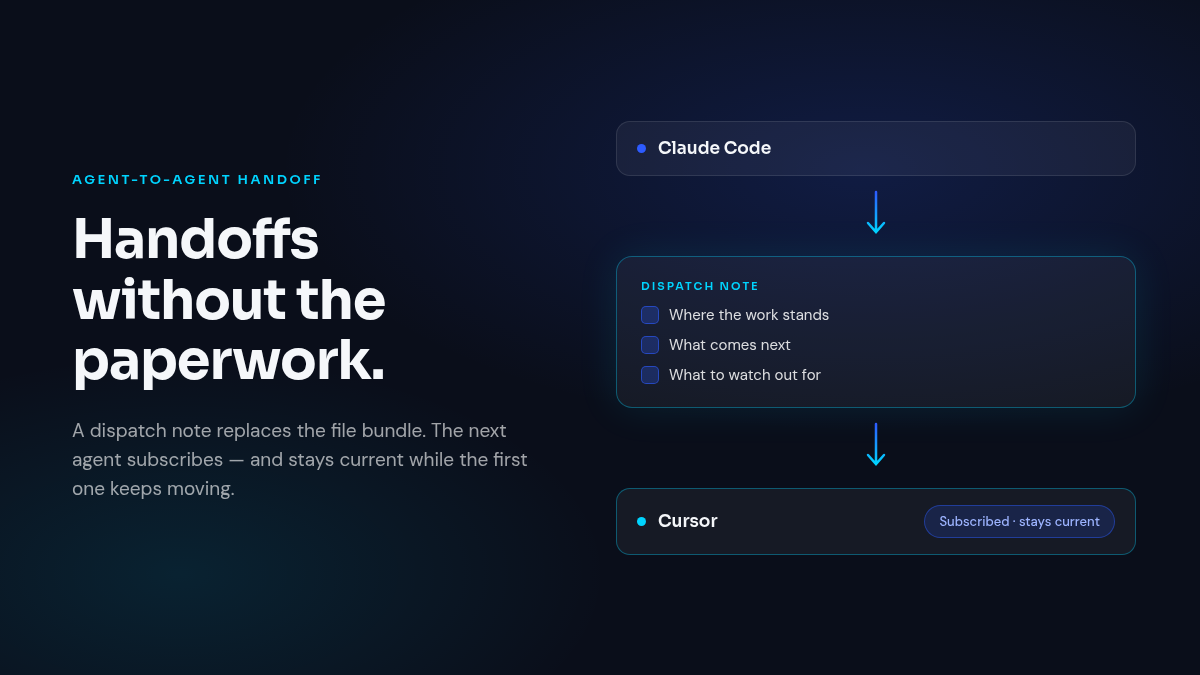
Handing a task from one agent to another used to mean bundling files and hoping nothing got lost along the way. Handoffs are now lightweight dispatch notes — no files to ferry, just a clear account of where the work stands, what comes next, and what to watch out for. The receiving agent can subscribe to the sender, so it stays current as the work keeps moving. Handoff controls now live right inside the composer editor, and orchestration can create local projects on your machines as part of a dispatched plan.
Memos became a task board
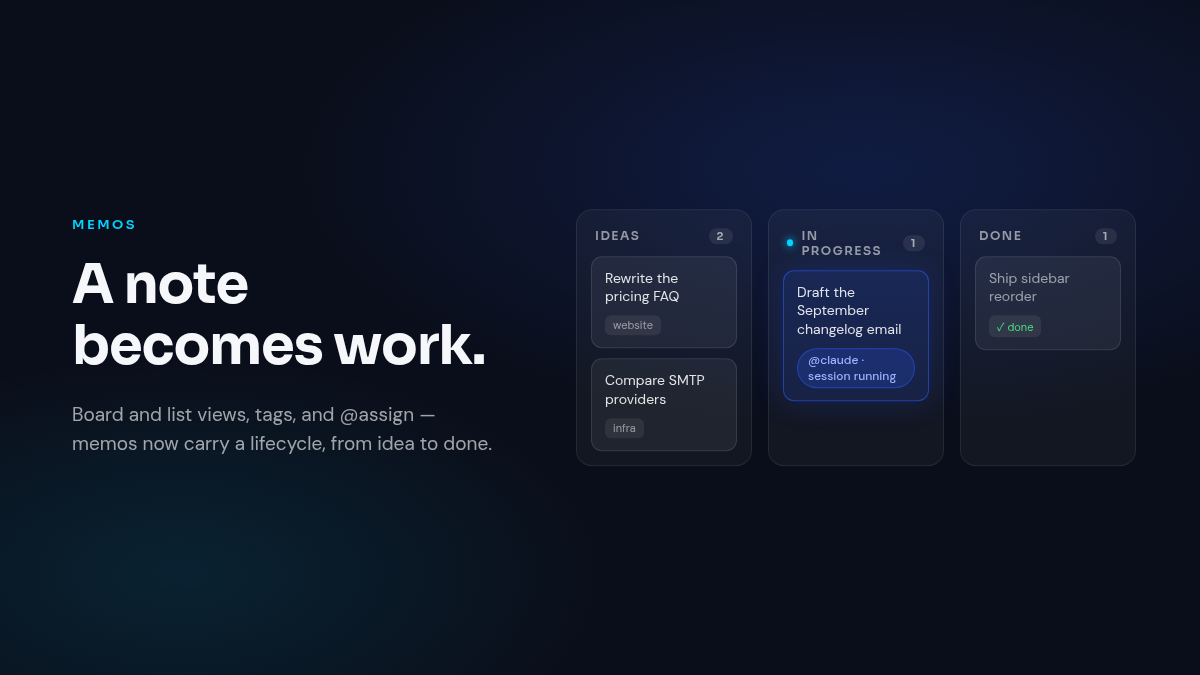
Memos now carry a lifecycle. Move cards across board or list views as they progress, group them with tags, and scan them quickly with richer card rendering. The change that matters most: @assign a memo to an agent and a session launches with that memo as its brief. The note you wrote for yourself this morning can be in progress before you’ve finished your next thought.
Context meters that tell the truth
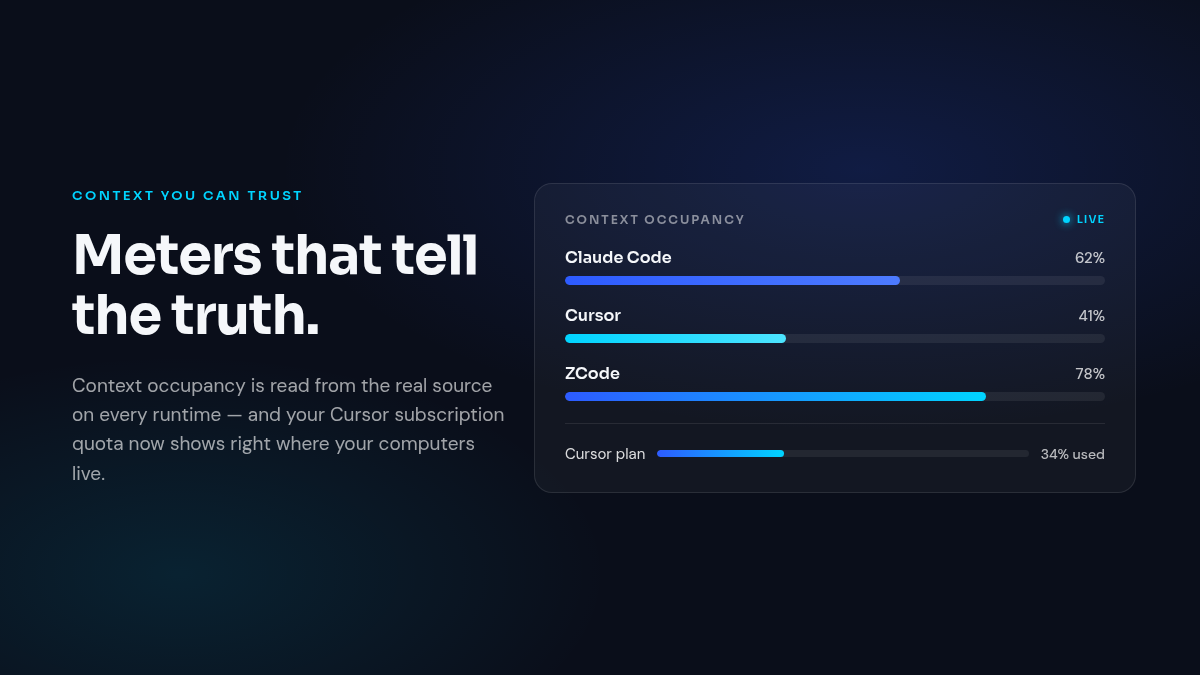
If you run several coding agents, you’ve probably seen their context readings disagree — or sit at a suspicious zero. Occupancy is now recovered from the real source for Cursor and ZCode, every runtime declares how it reports usage, and a runtime that can’t measure honestly no longer publishes a fake number. Your Cursor subscription quota shows up directly on the Computers list and host detail, and the Claude model catalog is discovered straight from your locally installed CLI, so what you’re offered is what’s actually there.
A workspace that stays how you set it
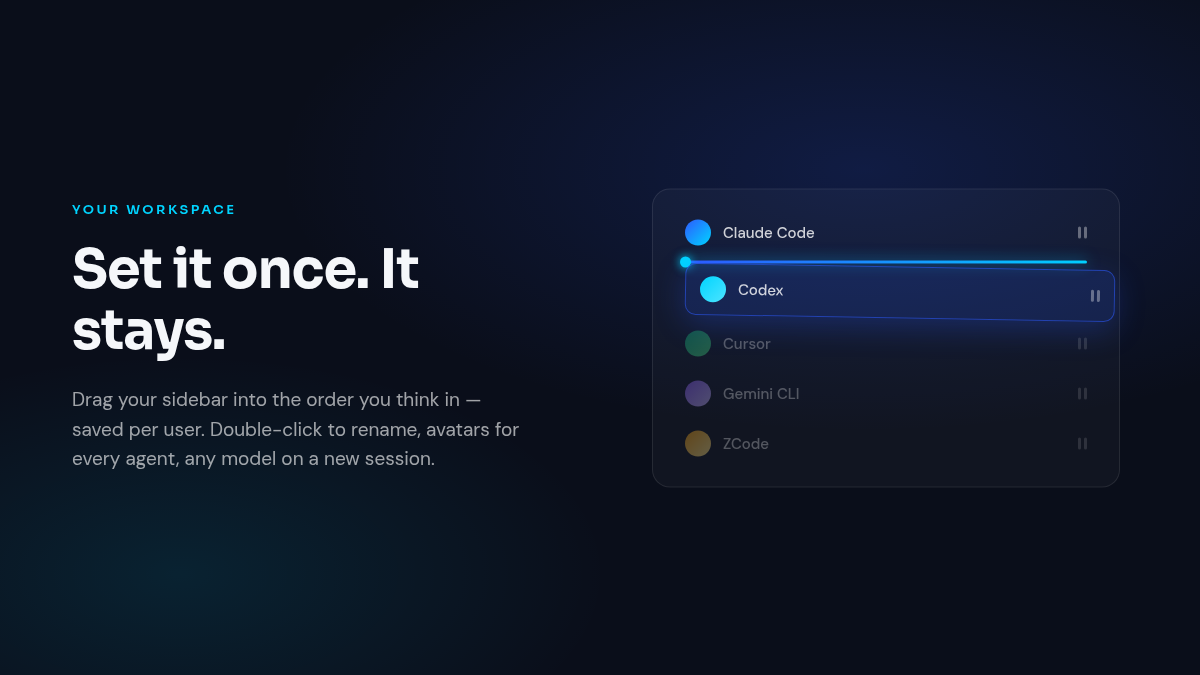
Drag your sidebar into the order you think in. The arrangement is saved per user, drag shows a compact ghost with a target indicator, and double-click renames any session inline. Agents and teammates get DiceBear avatars, and the cloud model picker is unlocked for new sessions — pick any model you have access to instead of settling for Auto.
Also shipped
- Turns that survive — a wall-clock guard that abandoned healthy mid-turn work is gone, and sessions stuck in Queued after a backend restart now recover on their own.
- Faster local starts — the Codex app-server is warm-pooled, trimming the wait before a local session answers.
- Errors in plain language — runtime failures surface a readable summary in the conversation; the full stack stays in the logs.
- Plan flow everywhere — the plan flow now closes cleanly on every runtime, and sessions spawned by orchestration start with advanced modes armed.
- Loop and Goal that persist — both stay alive across rounds instead of dying mid-run.
- Mobile polish — sidebar scrolling, toolbar layout, composer, and schedule-modal fixes on small screens.
- Release pipeline — iOS version conflicts reconcile themselves, organization entry points are hidden on Free and Hobby plans, and a browser-free end-to-end suite now regression-tests the daemon against real local CLIs.