When things go wrong mid-session — a timeout, an unexpected error, a network hiccup — you want your agent to pick up and keep going. That’s what this release focused on: making CrossMind more resilient under real-world conditions, upgrading the model at the core, and cleaning up a few rough edges in the interface.
Smarter Session Recovery
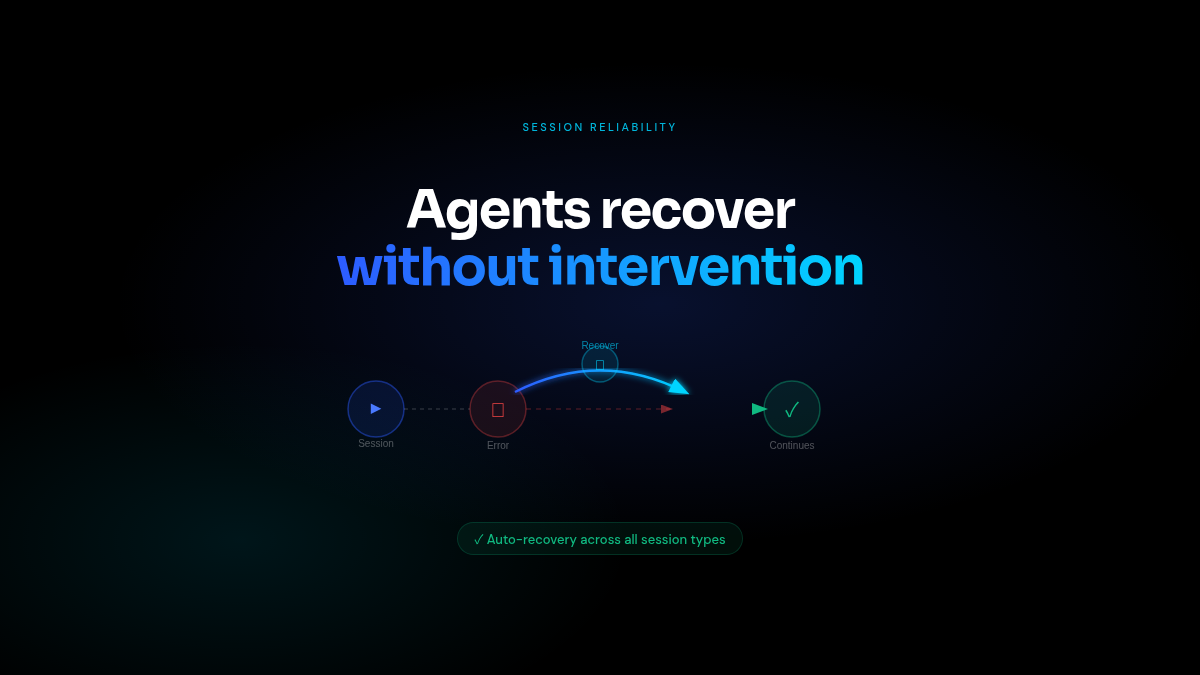
Agent sessions now recover from a broader set of failures without manual intervention. Previously, certain error states and timeout conditions could leave a session stuck — requiring a restart or a retry from the user. We’ve overhauled how session recovery and run roles are handled so that:
- Timeouts continue cleanly across all session types (copilot, task, member), rather than each type having its own fragile behavior
- Legacy completed session states are recognized correctly instead of being misread as active sessions
- Execution errors are treated as recoverable warnings where appropriate, rather than hard stops — the agent can assess the situation and continue rather than halting entirely
- Copilot stalled relay failures surface better messaging so you understand what happened and what to do
The practical effect: your agents are more likely to finish what they started, even when the underlying environment throws a curveball.
Claude Opus 4.7 Now Running in Production
The production Opus preset has been upgraded to Claude Opus 4.7. For tasks that use the Opus model — complex research, nuanced outreach, multi-step planning — you’ll get improved reasoning quality and more reliable outputs. No configuration change needed on your end; your existing tasks automatically benefit from the upgrade.
Playwright Preinstalled in Production
Browser automation is a core part of how CrossMind operates — scraping data, verifying pages, interacting with web interfaces. Previously, the official Playwright package needed to be installed on demand in production environments, which added latency and occasional setup failures.
Playwright is now preinstalled in the production image. Browser-dependent tasks start faster and more reliably, with one fewer point of failure during execution.
Interface Polish
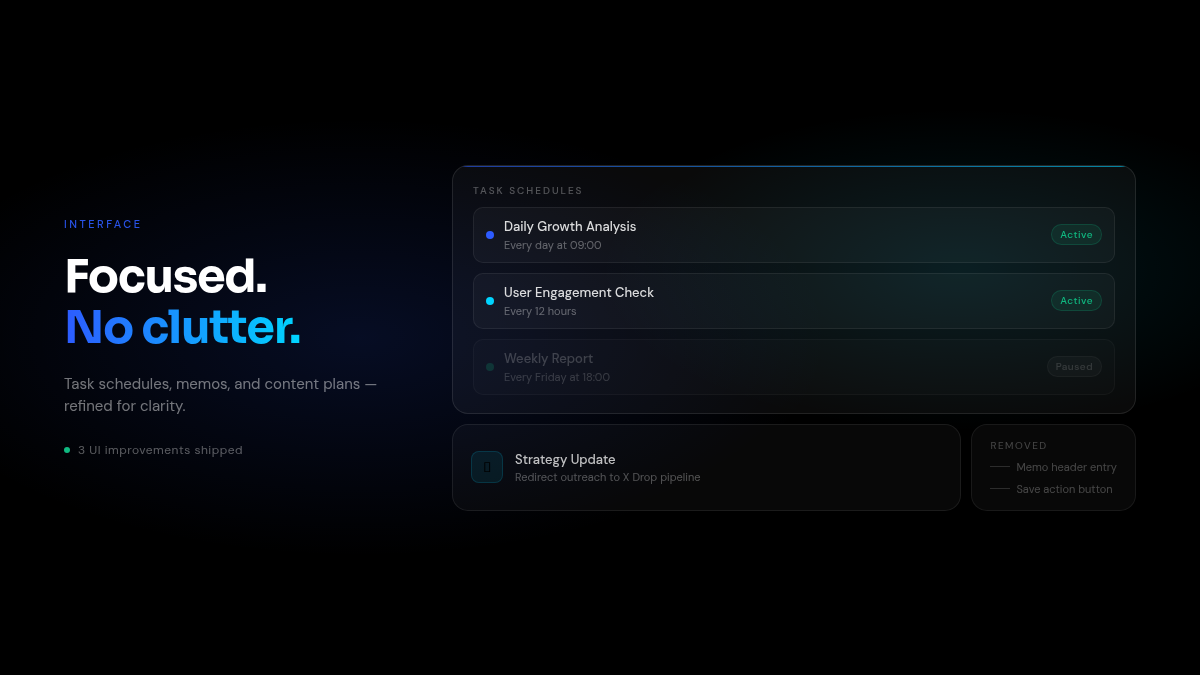
A few targeted UI improvements landed in this release:
Task schedules presentation — The way schedules are displayed within a task has been refined. The layout is cleaner and easier to scan, making it simpler to understand what’s scheduled, when, and in what order.
Memos header simplified — The memo entry and save action in the header have been hidden, reducing clutter in the navigation. Memos remain accessible where they’re contextually useful, without adding noise to the global header.
Content plan channel options updated — The content planning interface now reflects an updated set of channel options, keeping distribution choices current with how CrossMind actually operates.
Sharper Onboarding
The onboarding prompt rules have been tightened to produce more focused, consistent output during a user’s first session. Onboarding is the first impression — these changes make it faster to understand what CrossMind found and what to do next.