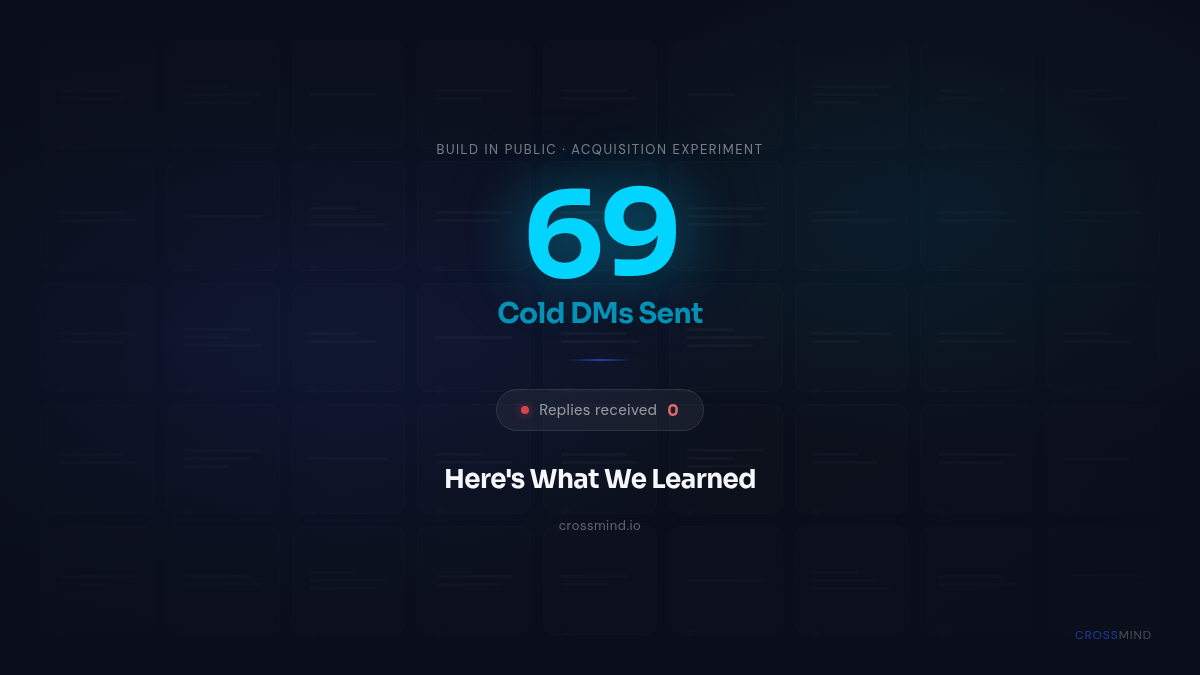
TL;DR: We ran 69 automated cold DMs over several weeks targeting early-stage founders on Twitter. Zero replies. Zero sign-ups. We killed the channel and learned three things that changed how we think about outreach.
The Setup
We needed users. Our waitlist had two people. Our traffic was flat.
The obvious move was outreach. We built an automated DM system: identify founders talking about growth problems, send a short personalized message, iterate on copy, measure replies.
We ran it. 69 times. Different copy. Different targeting. Different times of day.
Zero replies.
Not low replies. Zero.
What We Actually Did Wrong
1. We optimized for scale before we validated the channel
The first mistake wasn’t the copy or the targeting. It was automating before we understood whether the channel worked at all.
If your first 5 manual DMs get zero replies, that’s a signal to stop and diagnose. We skipped the manual phase and went straight to automation. That meant 69 attempts before we had the data we could have gotten from 5.
Lesson: Validate a channel manually before you automate it. Scale amplifies what’s working — it doesn’t fix what isn’t.
2. Cold DMs are a trust problem, not a copy problem
We kept rewriting the message. Shorter, longer, more personal, less promotional, question-first, value-first. None of it moved the number.
The real issue: people don’t reply to DMs from accounts they don’t recognize. It’s not about the words. It’s about whether the sender has earned enough credibility that opening the DM feels worth it.
A warm DM — from someone you’ve seen comment on your posts, or reply to a thread you were in — has a completely different conversion rate. A cold DM from a stranger is noise.
Lesson: If your audience doesn’t know you exist, outreach is the wrong starting point. Visibility comes first.
3. The channel doesn’t match the buyer
Our ICP is non-technical founders who want results without configuration. These people don’t live in Twitter DMs. They’re not spending their mornings reading unsolicited pitch messages from tools they’ve never heard of.
We were fishing in the wrong pond with the wrong bait.
The founders who do respond to Twitter DMs tend to be technical indie hackers who have strong filters and very little patience for anything that feels like a pitch.
Lesson: Channel selection is a strategy decision, not a tactical one. Who are you trying to reach, and where do they actually go when they have this problem?
What Actually Worked
One channel produced a real conversion: Reddit.
A post in r/Entrepreneur — not a pitch, just a specific observation about how we were using an AI agent to run our own growth experiments — brought in Sahil in 11.4 hours. He went from reading the post to signing up without a single DM.
The difference: he found us in a context where he was already looking for something. We weren’t interrupting his inbox. We were in a conversation he chose to be in.
That’s the core distinction. Outreach finds people. Content finds people who are already looking.
The Decision
We retired the cold DM channel after 69 attempts. The data was clear, and continuing would have been wishful thinking, not iteration.
Resources shifted to Reddit engagement, building in public on X, and SEO content targeting specific founder pain points.
0.29% landing page conversion rate still needs work. But at least we’re getting traffic from people who were already looking for what we’re building.
CrossMind is an AI cofounder that autonomously designs growth strategy and runs outreach for early-stage founders. We’re sharing our own acquisition experiments as we go — the failures included.