Local Runs That Bounce Back
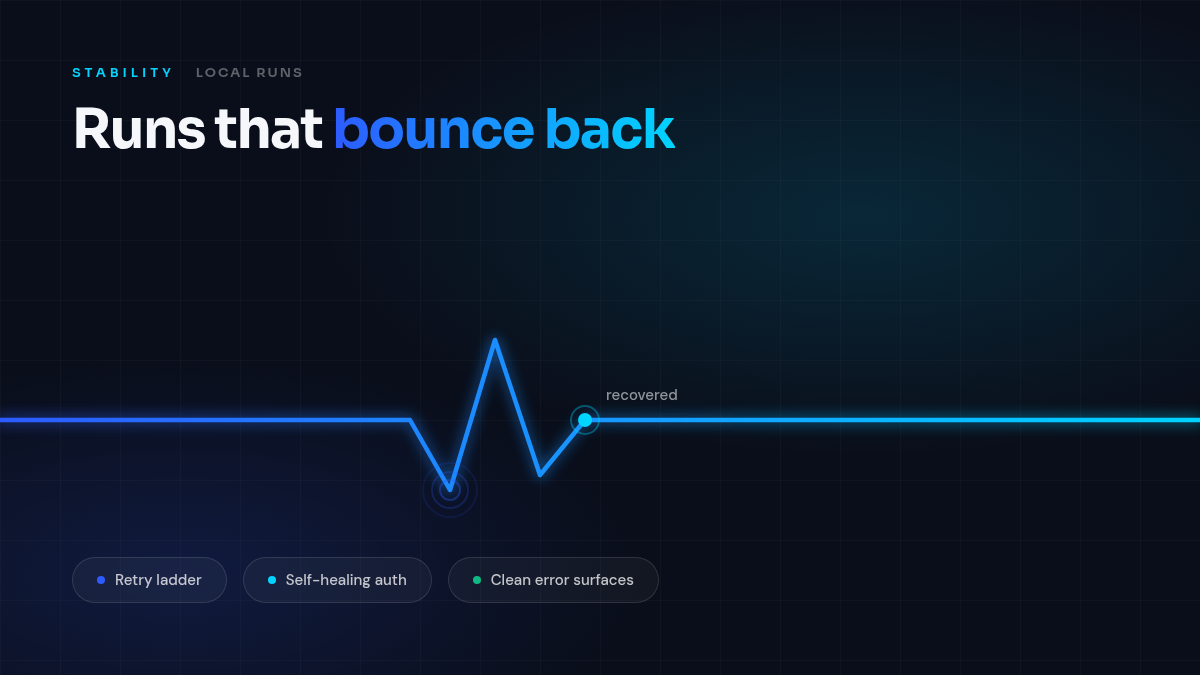
This update is a stability story. We replayed every way a local agent session broke in real usage, then fixed each one. A network blip mid-run used to end the session; now the connection retries on a graduated ladder instead of giving up. A finished session no longer keeps its old failure label. Tool calls that never came back get closed cleanly, and cloud hiccups during startup retry instead of failing the run. When something does go wrong, you see the actual error — including messages buried inside Codex — rather than a vague “something went wrong.” Each fix came from a real incident, and every one now lives in our fault-injection test library so it can’t quietly regress.
Your Machines, First-Class
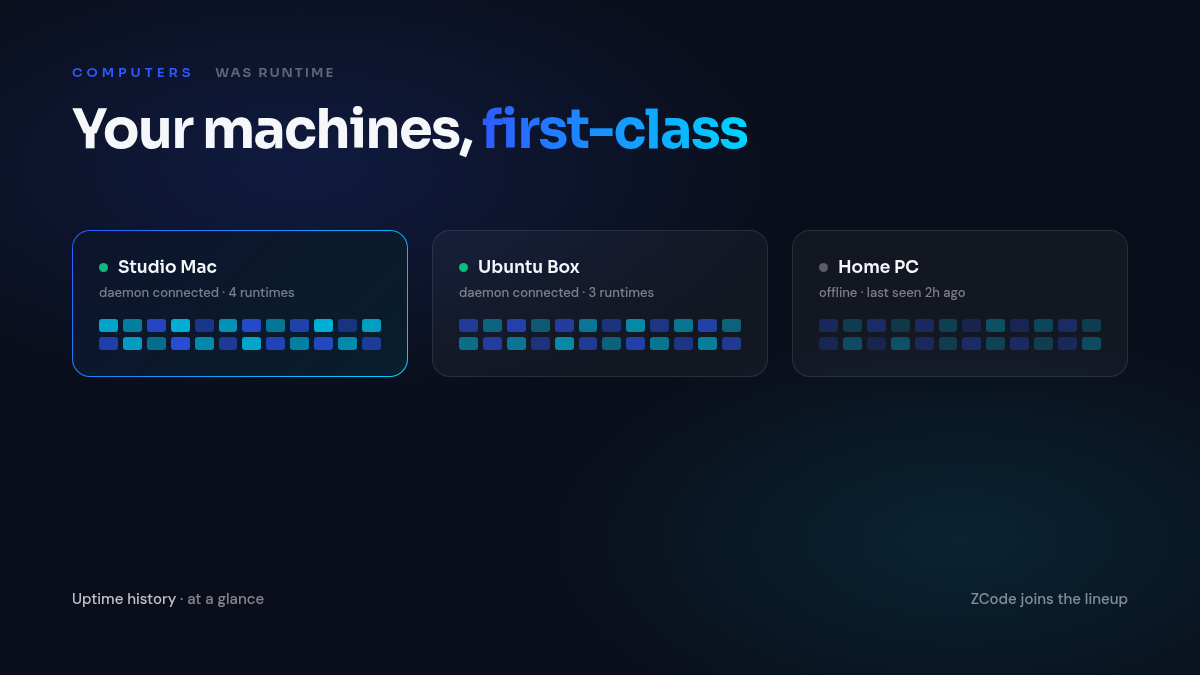
Runtime is now called Computers, and each of your machines gets a proper page: status in the title bar, a catalog of what’s installed, and an uptime history drawn as a grid you can scan at a glance. Sync conflicts between your local and cloud workspaces got rarer, and when one does happen, recovery is visible and works from your phone. ZCode joins the lineup of local coding agents your daemon can dispatch to, with live text streaming for Cursor-based sessions. You’ll also find your plan’s remaining usage and reset date right on the Computers pages, and schedules can be pinned to a specific machine.
Capabilities You Can Actually Manage
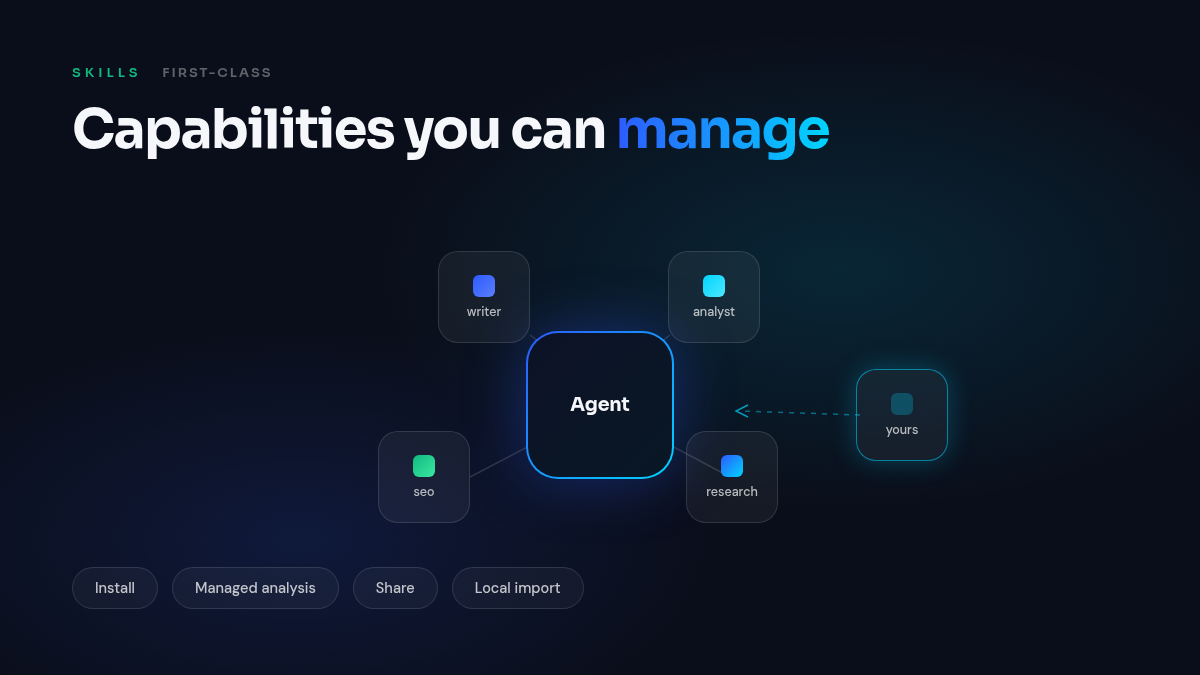
Skills — the packaged capabilities your agents draw on — got first-class management. Browse and install from the registry, read a managed analysis before you trust one, share your own, or import files locally. The composer’s Plan, Goal, and Loop controls now wire directly into the engine, so stating intent translates into behavior without ceremony.
Also Shipped
- Desktop updates without app releases — the dashboard inside the desktop app refreshes itself from a hot cache, and the daemon auto-updates quietly, with version details one click away in the status popover.
- OAuth in your own browser — connecting agent projects now authorizes in your system browser instead of an embedded window.
- A calmer workspace — simplified task and session lists, one unified design system across surfaces, and clearer dialogs on mobile.
- Stricter CI: pull requests run only the tests they affect, and release merges require a version bump.